
 ACCOUNT

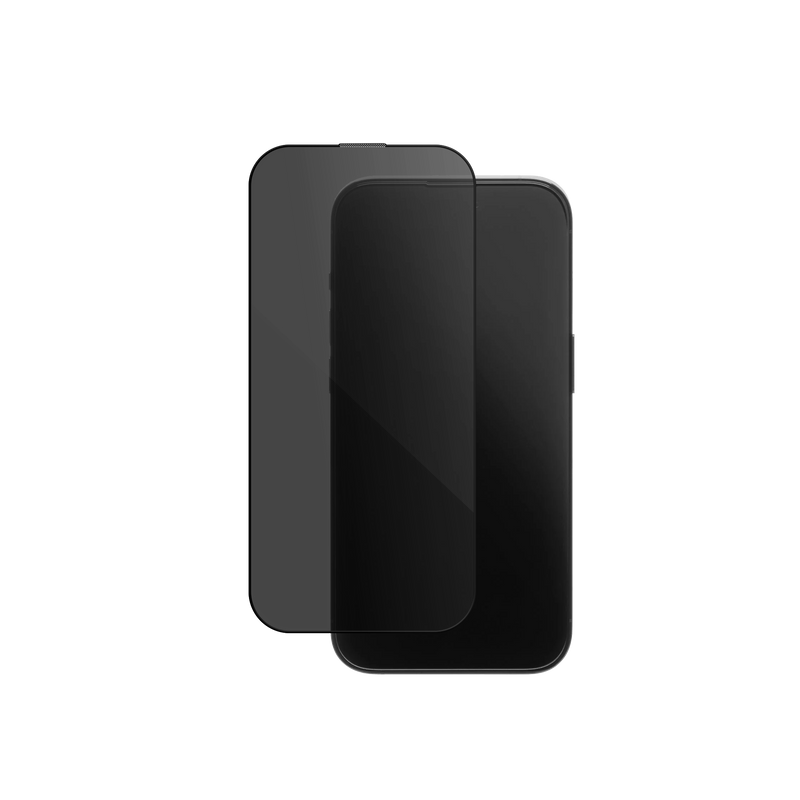
There are more kinds of phone screen protector than most people realise, and the labels on the box rarely explain the real trade-offs.
This guide breaks every type down across five dimensions, material, surface finish, glass shaping, adhesive, and strengthening, with the honest pros and cons of each, so you can pick the right one instead of the loudest one. It covers iPhone and Samsung Galaxy, including curved and folding screens.
The quick version: every type at a glance
If you only read one thing, read this table. The rest of the guide is the detail behind it.
| Material | Protection | Feel | Scratch resistance | Price | Best for |
|---|---|---|---|---|---|
| Tempered glass | High (scratch + impact) | Closest to the original screen | Excellent | $ | Most people |
| PET film | Low (scratch only) | Plasticky | Poor | Cheapest | Budget or temporary use |
| TPU / hydrogel film | Medium, flexible | Soft, slightly rubbery | Fair (some self-heal) | $$ | Curved and folding screens |
| Ceramic composite | Medium, shatter-resistant | Slightly soft | Fair | $$ | People who hate glass shattering |
| Liquid / nano coating | Very low (scratch only) | Invisible, native feel | Poor, and wears off | $$ | People who refuse any film |
For most people on a standard flat-screen iPhone or Galaxy, tempered glass is the answer. The other rows exist for specific situations, which the rest of this guide explains.
1. By material: glass, PET, TPU/hydrogel, ceramic and liquid
Tempered glass
Pros feel closest to the original screen, high surface hardness (usually marketed as 9H), excellent scratch resistance, responsive touch, and the easiest type to install cleanly.
Cons the glass itself can crack or chip on a hard drop (that is it doing its job), edges can catch, and it is thicker than film at roughly 0.25 to 0.4 mm.
A note on "9H": this refers to the pencil-hardness scale, not the Mohs mineral scale, so it describes scratch resistance against everyday hard objects rather than a guarantee against everything. Nearly every glass protector claims 9H, so it is a baseline, not a differentiator.
You will also see "hybrid glass" or "flexible glass", a thin glass-and-film laminate that resists shattering better than plain glass but usually gives up a little of that solid glass feel. It sits between tempered glass and film rather than being a separate category.
PET film (plastic)
Pros very thin, low cost, and it will not shatter.
Cons scratches easily, feels plasticky, and offers almost no impact protection. In a real drop the film often survives while the actual screen underneath cracks, which defeats the point.
TPU / hydrogel film (thermoplastic polyurethane)
This is the flexible film most brands now sell as a hydrogel screen protector. Hydrogel and TPU refer to the same broad family: a soft, bendable polymer film, as opposed to rigid glass.
Pros soft and flexible, so it can wrap curved and folding screens, and some versions have limited self-healing for light scratches.
Cons softer feel, scratches more readily than glass, and it is harder to install without bubbles.
Hydrogel vs tempered glass, quickly: hydrogel wins on flexibility and edge coverage for curved and folding phones, and it will not shatter. Tempered glass wins on scratch resistance, a firmer glass feel, and easier bubble-free installation. On a flat iPhone or Galaxy, glass is the better everyday pick; on a curved or folding screen, hydrogel (or UV-bonded glass, below) is the sensible one.
Ceramic composite film
Despite the name, this is not real ceramic and it is not the same as the Ceramic Shield glass built into recent iPhone screens. It is a special composite polymer film.
Pros resists shattering, has some flexibility, and is more wear-resistant than TPU.
Cons scratch resistance is usually below true tempered glass, and marketing runs ahead of any consistent standard, so quality varies a lot between brands.
Liquid / nano coating
Not a film at all, a liquid solution you wipe onto the screen that cures into an invisible nano layer.
Pros completely invisible, keeps the native touch feel, works on any shape of screen, and adds a light smudge- and scratch-resistant coating.
Cons almost no drop protection, it will not stop the glass underneath from cracking, the effect is unmeasurable at the point of sale, and it wears off in a few months so you re-apply. Treat it as a coating, not real screen protection.
The material takeaway: for a flat phone screen, tempered glass is the best all-round choice. For a folding phone such as a book-style fold, a flexible TPU / hydrogel film (or a UV-bonded solution, below) is the only suitable option, since rigid glass cannot bend across the hinge. Liquid coatings are a nice-to-have finish, not a substitute for a physical protector.
2. By surface finish: clear, matte, privacy, anti-reflective and blue-light
Before the finishes themselves, two numbers decide how good any of them looks, and they turn up on spec sheets with no explanation: transmittance and haze.
- Transmittance = how bright. How much light passes through the protector, as a percentage. Higher means a brighter screen with colour closer to the original.
- Haze = how clear. How much that light scatters on the way through. Lower means a sharper picture; higher makes the screen look soft, milky or grey.
In short: transmittance is whether it looks bright, haze is whether it looks sharp, and you have to read them together. Here is roughly where each finish lands.
| Finish | Transmittance | Haze | Look |
|---|---|---|---|
| HD clear glass | 90 to 97% | 0.3 to 2% | Near-naked screen |
| Privacy glass | 60 to 80% | 3 to 8% (front) | Clear front, dark from the side |
| Matte / anti-glare | 85 to 92% | 10 to 30% | Diffused, slightly grainy |
| TPU / hydrogel film | 88 to 92% | 2 to 5% | Slightly soft |
Rule of thumb: transmittance above 93% is high-end and below 90% looks noticeably downgraded; haze under 1% is naked-screen level, 1 to 3% is fine, and above 5% starts to look soft, unless it is a privacy or matte finish where that is by design.
HD clear
The most common finish. High light transmittance (typically around 90 to 95%), accurate colour, and suitable for the vast majority of users.
Matte (anti-glare)
Pros cuts glare, hides fingerprints, and lowers finger friction for a smoother swipe, which is why many mobile gamers prefer it.
Cons introduces a slight grain and reduces sharpness, so text and images look a touch less crisp.
Privacy (anti-spy)
Pros blacks out the screen from the side so people next to you cannot read it.
Cons the screen looks slightly darker head-on and the viewing angle narrows. If you are weighing this one specifically, see our dedicated clear vs privacy comparison.
Anti-reflective (AR)
An optical coating that cuts mirror-like reflections rather than diffusing them the way matte does, so you keep more sharpness while glare drops. It is usually a coating added on top of a clear or matte glass, not a separate protector, and it adds cost.
Eye-care / blue-light filtering
Filters part of the blue-light spectrum. Worth knowing before you buy: some versions add a yellow tint that shifts colour, which matters if you view photos or design work, and the evidence for blue-light filters easing eye strain is mixed. Treat it as a personal-preference feature rather than a proven benefit.
The finish takeaway: HD clear is the default for most people. Choose privacy only if you want side-angle blocking. Matte, anti-reflective and blue-light are situational, worth it only if you willingly trade some of the original colour and clarity for their specific feel or filter.
3. By glass shaping: 2.5D, 3D full cover and UV glue
- 2.5D: lightly curved, polished edges. Fits alongside most phone cases on the market, which makes it the safe everyday choice.
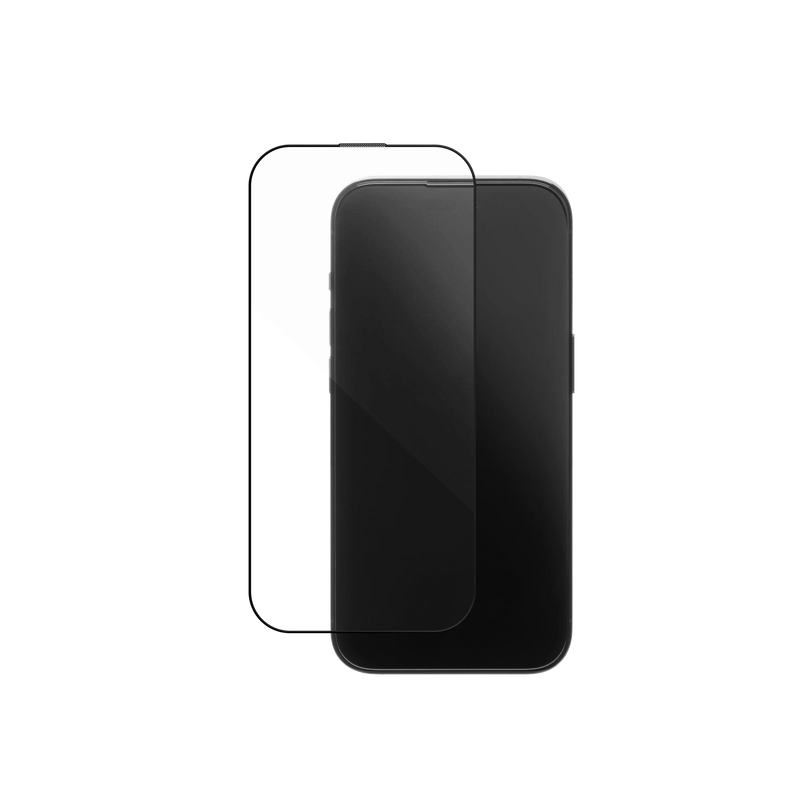
- 3D full cover: covers the entire front panel with a black or coloured border. Looks the most finished, but with many cases it meets the raised lip at the edge and lifts.
- UV glue glass: mainly for curved screens such as Samsung Galaxy Edge and Ultra models, bonded with UV-cured adhesive for the best edge adhesion. Gives the cleanest result on a curved panel but is the hardest to install.
The shaping takeaway: if you change your case often, 2.5D is the safe pick. For a curved or folding screen, UV glue glass or a flexible hydrogel film is the stronger option despite the trickier install.
4. By adhesive layer
- Silicone adhesive: the value choice. More than enough for everyday use at an accessible price.
- Full glue: bonds across the whole back of the protector, which adds cost and usually a higher price.
- Edge glue: an older approach that only bonds the border.
- Liquid UV adhesive: paired with UV glass for curved screens.
The adhesive takeaway: for a flat screen, a good silicone adhesive is the sensible, cost-effective choice and is plenty for daily life.
5. By strengthening technology (and what to watch for)
Brands advertise a lot of processes: double tempering, chemical strengthening, ion-exchange, high-aluminosilicate glass, nano coating, an oleophobic (AF) layer, and anti-reflective (AR) coating. These are manufacturing methods, not separate product types.
Two are genuinely worth having: high-aluminosilicate glass (a tougher base glass) and an oleophobic coating (keeps fingerprints wiping off cleanly).
Here is the honest part. These claims are almost impossible to verify at the point of purchase, and some brands overstate them. Glass that never met a proper tempering spec gets sold as "double tempered" and then cracks or shatters far too easily; a cheap oleophobic layer wears off fast and leaves fingerprint oil that is hard to clean. The label rarely tells you which you are getting, which is exactly why the source and the actual specs matter more than the buzzwords.
So which screen protector should you choose?
Collapsing all five dimensions into plain advice:
- Most people, flat iPhone or Galaxy: tempered glass, HD clear, 2.5D, with a silicone or full-glue adhesive. This is the default for a reason.
- Want privacy in public: a privacy tempered glass instead of clear.
- Heavy mobile gaming: a matte (anti-glare) tempered glass lowers friction for faster swipes and hides sweat and fingerprints; stay on HD clear if you value sharpness over glide.
- Samsung Galaxy curved or Edge screen: UV glue glass for a clean bonded edge, or a flexible hydrogel film.
- Folding phone (for example an iPhone Fold): a flexible TPU / hydrogel film or a UV-bonded solution, never rigid flat glass.
- Specific needs: matte if glare bothers you more than sharpness, blue-light only as a personal preference, liquid nano only if you refuse any visible film and accept it is a coating, not real protection.
For the wider decision, including whether you even need one and how the specs map to real use, see our complete screen protector guide.
Will it work with an in-display fingerprint sensor?
On phones with an under-display fingerprint reader, mostly Samsung Galaxy and some Android models, the protector sits directly over the sensor, so thickness and material matter. Thick or poorly made glass, and stick-on film with trapped air, can slow down or block ultrasonic fingerprint unlock. A thin, well-bonded protector rated as fingerprint-sensor compatible avoids this; after fitting one it is worth re-registering your fingerprint so the sensor reads cleanly through the new layer. iPhones use Face ID, so this is not a concern on iPhone.
Will your screen protector work with your case?
This is where a lot of protectors fail. A full 3D edge-to-edge protector meets a case with a raised lip at the corners and lifts. A case-friendly protector, usually 2.5D with a small margin around the screen, leaves a clean gap so the two sit together. If you choose a case and a protector designed to work as a pair, the fit stays clean and the look stays intentional. Browse the full range of aesthetic iPhone cases, or read our complete guides to aesthetic phone cases and Samsung Galaxy cases, to match one to your setup.
How KELAB's tempered glass is built
KELAB makes tempered glass protectors, clear and privacy, plus camera lens protectors. Rather than sell a dozen types and leave you to decode the spec sheets, we picked the upper-mid solution at each layer above and combined them into two protectors, at a price that does not compromise on the parts that matter. Here is exactly what that means, in the open:
| Spec | KELAB HD Clear | KELAB Privacy |
|---|---|---|
| Glass | 9H high-aluminosilicate | 9H high-aluminosilicate |
| Finish / clarity | 94% light transmittance, under 2% haze | Anti-spy privacy filter; clear head-on, dark from the side, slightly dimmer |
| Thickness / edge | 0.33 mm, 2.5D (case-friendly) | 0.33 mm, 2.5D (case-friendly) |
| Coating | Japanese Shin-Etsu oleophobic, wipe-tested | Japanese Shin-Etsu oleophobic, wipe-tested |
| Adhesive | Silicone adhesive | Silicone adhesive |
| Drop tested | 64 g steel ball from 80 cm | 64 g steel ball from 80 cm |
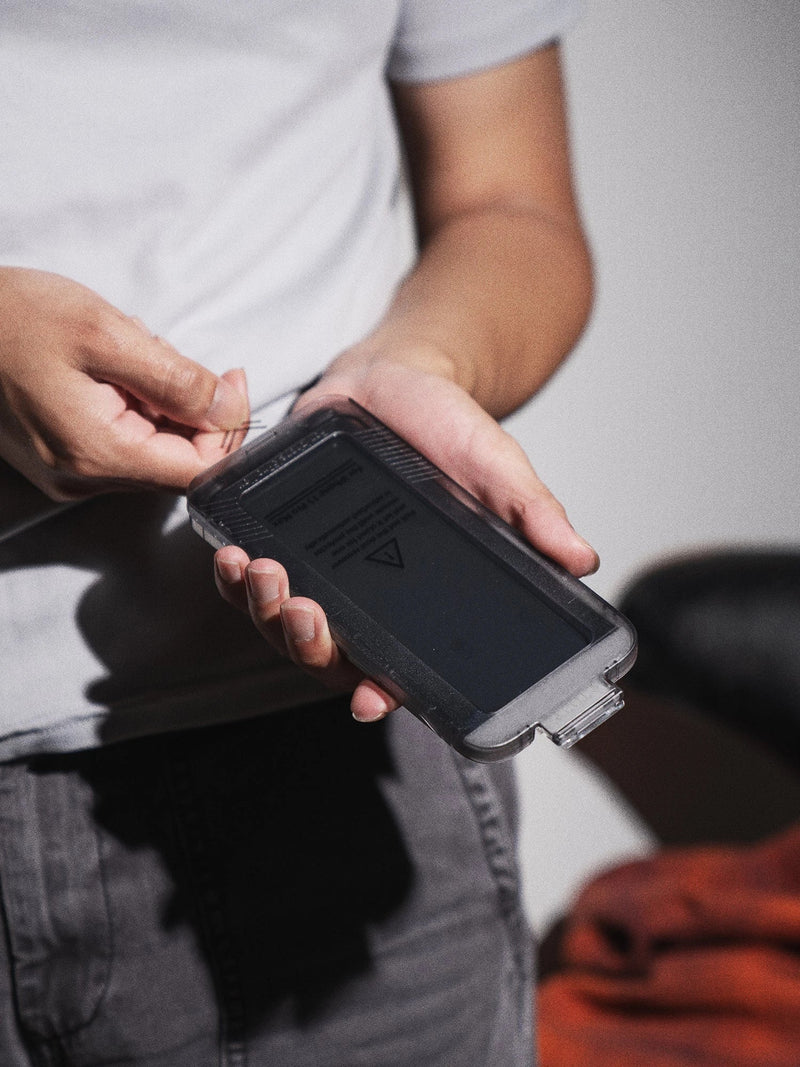
| Install | Dust-free alignment tray, bubble-free fit in about 1.5 minutes | Dust-free alignment tray, bubble-free fit in about 1.5 minutes |
| Fit | iPhone 12 to 18 and Samsung Galaxy | iPhone 12 to 18 and Samsung Galaxy S25 / S26 |
| Anti-reflective |  |
|
| Price | $12 | $14.99 |
Reading that against the ranges above: KELAB's HD Clear runs 94% transmittance with under 2% haze, mainstream HD-clear brightness kept crisp by low, near-naked-screen haze, and no premium for an inflated "ultra-clear" number.


Frequently asked questions
What is the best type of screen protector?
What is the strongest type of screen protector?
Is tempered glass better than a film screen protector?
Is a hydrogel screen protector better than tempered glass?
Are liquid (nano) screen protectors worth it?
Does 9H hardness mean the glass is unbreakable?
Is a ceramic screen protector the same as Apple's Ceramic Shield?
Will a screen protector work with an in-display fingerprint sensor?
Which screen protector works best with a case?
How often should you replace a screen protector?
Skip the guesswork
We picked the right options at every layer so you do not have to. Clear, privacy and lens protectors for iPhone 12 to 18 and Samsung Galaxy.
Shop screen protectors →9H tempered glass. From $12.


